NGINX HTTP/2 Vulnerability CVE-2026-123007 (nginx2root): Check Version and Secure Server Before Exploiting
By Tim APIPedia, Tim Engineering APIPedia · Published · 15 min read
The 10-year-old HTTP/2 NGINX vulnerability CVE-2026-123007 allows code execution without login. Check the version, turn off HTTP/2, then update to 1.31.9 or 1.30.7.

CVE-2026-123007 is an integer underflow vulnerability in NGINX's HTTP/2 flow control handling that could corrupt worker memory and, under certain conditions, allow a non-logged in attacker to run code on the server. This flaw exists in all open source NGINX releases 1.9.5 to 1.31.8, it was fixed in 1.31.9 and 1.30.7 which were released November 18, 2026, and the PoC is already public on GitHub, but there have been no reports of actual attacks.
What makes it special: this bug has been hiding for more than ten years, since NGINX first supported HTTP/2 in 2015, and was discovered independently by several teams at once, namely Xint, Wiz, Rapid7, and Ikotas Labs. The requirements are simple: just have HTTP/2 active, even on servers that only serve static files. This article discusses how it works, safe versions per branch and distro, how to check multiple servers, temporary mitigation, updates, and how to look for traces of attacks.
Quick summary: what do you need to know?
| Items | Details |
|---|---|
| ID | CVE-2026-123007 (GHSA-m4q8-cf44-f42r), part of a collection of vulnerabilities dubbed "nginx2root" |
| Type | Integer underflow (CWE-191) resulting in out-of-bounds write (CWE-787) in module ngx_http_v2_module |
| Impact | Worker crashes, memory leaks and corruption, to code execution with NGINX worker access rights, without authentication |
| Score | CVSS 4.0: 9.2 Critical ( AV:N/AC:H/AT:N/PR:N/UI:N/VC:H/VI:H/VA:H/SC:N/SI:N/SA:N). CVSS 3.1: 8.1 High ( AV:N/AC:H/PR:N/UI:N/S:U/C:H/I:H/A:H) |
| Impacted version | NGINX Open Source 1.9.5 to 1.31.8. NGINX Plus 37.x before the fix build, as well as R33 and above |
| Safe version | NGINX 1.31.9 (mainline) and 1.30.7 (stable). NGINX Plus 37.3.0.1 and 37.0.8.1 |
| Status | Public PoC from Rapid7. There have been no reports of exploitation, not yet included in CISA KEV as of November 18, 2026 |
| Inventor | Xint.io, Stephen Fewer (Rapid7), Tomer Schwartz (Wiz Research), and Ikotas Labs, independently |
How does this loophole work?
HTTP/2 uses a "credit" system called flow control. The client grants permission to the server to send a certain number of bytes of data, and extends that permission via frame WINDOW_UPDATE. According to RFC 9113, the connection window cannot exceed 2,147,483,647 bytes (2^31-1). NGINX stores the remaining connection credits in an unsigned variable ( size_t), so that limit must be maintained by NGINX's own logic.
According to Rapid7 analysis, when NGINX queues DATA frames, credits are cut first. The attacker then deliberately slows down the reading of the response to keep the frame queued, increases the connection credit to the maximum limit, and then cancels the stream. During cleanup, NGINX returns credits of unsent frames without checking whether the total is now over the limit. The next WINDOW_UPDATE checks perform unsigned subtractions that "wrap" into a giant number, so the attacker can continue adding credits. Ultimately that number is read as a negative response length, and memcpy copies the data outside the buffer boundaries.
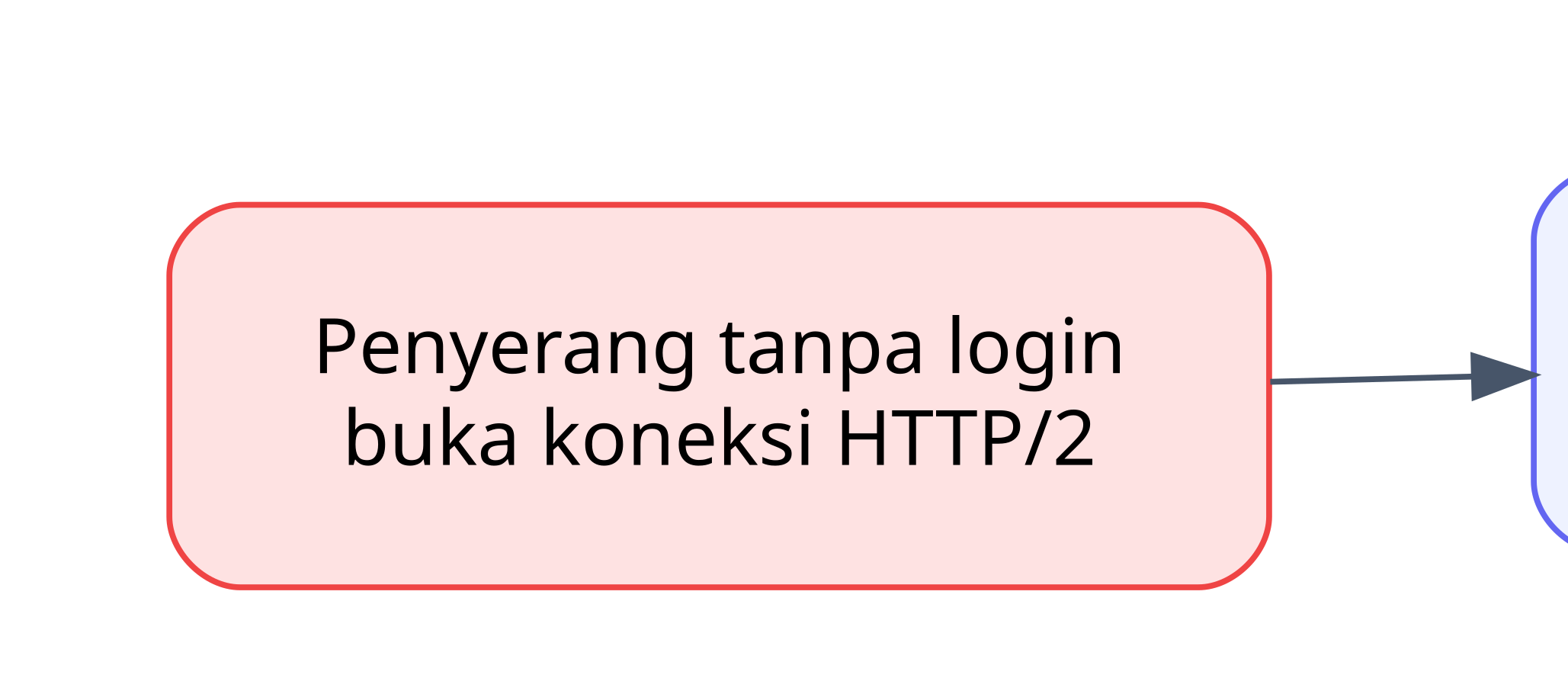
The improvements are minor. Commit b89c410 adds a counter send_queued so that frames still in queue are taken into account when validating WINDOW_UPDATE from the client. From the client's point of view, the queue frame is still part of the credit window.
Why is ASLR alone not enough protection?
F5's official description says code execution may occur on systems with ASLR off, or if an attacker can bypass ASLR. This sentence was read as "safe if ASLR is active". CIRCL, Luxembourg's national CERT, insists otherwise: turning off ASLR is not a prerequisite, as the Xint report documents a technique for leaking memory addresses to bypass ASLR. Wiz also stated that he succeeded in passing ASLR in his test. So servers with full ASLR still need to be patched.
Code executed through this loophole gets worker process privileges, not root. But Xint weaves it with a separate loophole in the Linux kernel's SCTP subsystem to gain root on the host, including exiting the Docker container. As of November 18, 2026, the kernel vulnerability does not yet have a CVE number.
Who is affected?
- All open source NGINX servers 1.9.5 through 1.31.8 are built with the HTTP/2 module and enable it via
listen ... http2orhttp2 on;. Modern HTTPS configurations almost always turn on HTTP/2. - A server that only serves static files without a backend. Wiz demonstrates code execution in such a configuration without third-party modules.
- Distro package users. Debian bookworm, trixie, forky, and sid are listed as still vulnerable, and Ubuntu lists nginx as vulnerable in releases 16.04 through 26.10, as of November 18, 2026.
- NGINX Plus users: 37.1.0 up to 37.3.0.1, 37.0.0 up to 37.0.8.1, and R33 and up. According to The Hacker News, R34 through R36 are not listed as having a fix.
- Legacy containers and images that carry NGINX itself, including NGINX-based ingress controllers and appliances.
Not affected by this CVE: NGINX 1.9.4 and below (before HTTP/2), builds without --with-http_v2_module, and servers that disable HTTP/2 on all listeners. According to CyberScoop, F5 says BIG-IP and F5OS are not vulnerable, while F5's cloud services are still being evaluated.
How serious is the exploitation?
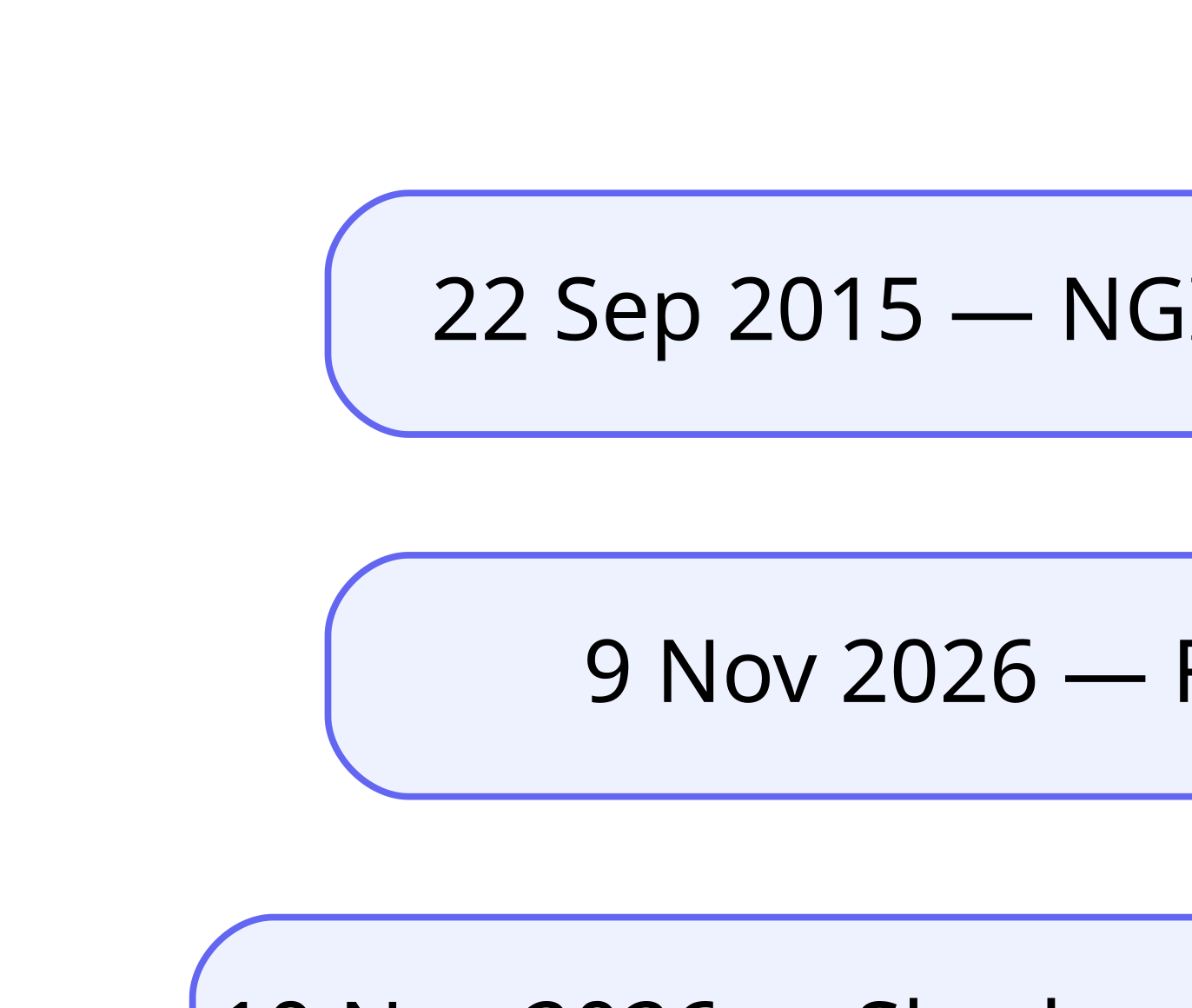
The potential impact is great, but real exploitation on the internet is not easy. Available figures:
- As of November 10, 2026, Shodan returned 56.7 million hosts for
product:nginx. A total of 11.94 million (21.1%) displayed the version, and 98.9% of them were in the vulnerable range. Xint insists this number is based on the version string, not proof of vulnerability, because HTTP/2 is not necessarily active and backports may already be installed. - The Rapid7 exploit requires approximately 128 GB of HTTP/2 traffic. The demo was over in two and a half minutes. On a 10 Gbit/s network it took about two minutes, on 1 Gbit/s about 17 minutes, and below roughly 300 Mbit/s the attack failed because it exceeded NGINX's built-in connection lifetime limit of one hour.
- The Rapid7 exploit strategy relies on a specific
memcpyglibc routine selected on x86-64 CPUs with featuresavx512fandavx512vl. When an HTTP/2 connection passes through a proxy, the attacker's frames may not be forwarded in the required form. - Rapid7's PoC README note says PoC is only suitable for freshly started Docker containers, and may fail on servers with lots of clients or already "cluttered" heaps. In contrast, Xint said its attacks were successful against test servers on AWS, GCP, and Azure via public IPs.
- SSVC assessment from CISA on November 18, 2026: Exploitation "none", Automatable "no", Technical Impact "total". The Hacker News noted this flaw was not yet in KEV's catalog that day.
There are differences in assessment that need to be noted. F5 as a CNA gave it 9.2 (CVSS 4.0) and 8.1 (CVSS 3.1), and Red Hat also rated it 8.1. Rapid7 lists 9.2 with vector AT:P (there are attack prerequisites), while F5 uses vector AT:N. The "Attack Complexity: High" value reflects the difficulty of the exploit, not the low impact. Given that the PoC is public and the technical details are open, the distance to a real attack could be short.
Which version is safe?
Releases 1.31.9 and 1.30.7 fix CVE-2026-123007 as well as four other nginx2root vulnerabilities, namely CVE-2026-123633 (use-after-free HTTP/2), CVE-2026-121810 (HTTP/3), CVE-2026-123634 (resolver), and CVE-2026-113425 (mail proxy).
| Branch/distribution | Safe version | Notes |
|---|---|---|
| NGINX mainline 1.31.x | 1.31.9 | Released November 18, 2026 |
| NGINX stable 1.30.x and legacy branches (1.9.5 to 1.30.6, including 1.28) | 1.30.7 | Old branches don't get their own releases; up to 1.30.7 or 1.31.9 |
| NGINX Plus 37.1.x to 37.2.x | 37.3.0.1 | Per advisory F5 K000163926 |
| NGINX Plus 37.0.x | 37.0.8.1 | Per advisory F5 K000163926 |
| NGINX Plus R34 to R36 | Not listed | Migrate to patched 37.x branch |
Official Docker image nginx | Tags 1.31.9 and 1.30.7 | Including the Alpine variant, per The Hacker News |
| Debian 12 (1.22.1-9+deb12u10), Debian 13 (1.26.3-3+deb13u10), forky, sid | Not yet available as of 18 Nov 2026 | Monitor Debian's security tracker; use mitigation first |
| Ubuntu 16.04 to 26.10 | Not yet available as of 18 Nov 2026 | Monitor Ubuntu's CVE page; version nginx -v was unchanged during backport |
One date note: the CIRCL TR-105 report says 1.31.9 is scheduled for November 19, while the official nginx.org changelog lists 1.31.9 and 1.30.7 as being dated November 18, 2026. Used in this article are the official changelog dates.
How to check if your NGINX is vulnerable?
The server is exposed if three conditions are met: the version is unpatched, the HTTP/2 module is in the binary, and HTTP/2 is active and reachable. The following commands are read only, adapted from the Xint guide:
# 1) Versi NGINX (rentan: 1.9.5 sampai 1.31.8)
nginx -v 2>&1

# 2) Apakah binary dibangun dengan modul HTTP/2?
nginx -V 2>&1 | grep -q -- '--with-http_v2_module' \
  && echo 'HTTP2_MODULE=present' \
  || echo 'HTTP2_MODULE=absent'

# 3) Apakah HTTP/2 aktif di konfigurasi? (abaikan baris komentar)
sudo nginx -T 2>&1 \
  | sed 's/#.*//' \
  | grep -nE 'listen[[:space:]].*http2|^[[:space:]]*http2[[:space:]]+on[[:space:]]*;'

# 4) Versi paket distro (backport tidak mengubah angka di nginx -v)
dpkg -l | grep -E '^ii\s+nginx'      # Debian/Ubuntu
rpm -q nginx                         # RHEL/AlmaLinux/Rocky
Then test from outside the network whether the server actually accepts HTTP/2. Replace situsanda.id with your domain. If there is a CDN in front, also test directly to the NGINX origin IP, because origins that only accept HTTP/1.1 cannot be attacked via this route.
# "ALPN protocol: h2" = HTTP/2 diterima; "No ALPN negotiated" = tidak
openssl s_client -connect situsanda.id:443 -servername situsanda.id -alpn h2 </dev/null 2>&1 \
  | grep -E 'ALPN protocol:|No ALPN negotiated|Connection refused|connect:errno|handshake failure'
For multiple servers at once, run version and module checks via SSH from a single admin machine:
# daftar-server.txt berisi satu host per baris
while read -r h; do
  v=$(ssh -n "$h" 'nginx -v 2>&1' | sed 's/.*nginx\///')
  m=$(ssh -n "$h" "nginx -V 2>&1 | grep -c -- '--with-http_v2_module'")
  echo "$h versi=$v modul_http2=$m"
done < daftar-server.txt

# Container yang sedang berjalan dengan image nginx
docker ps --format '{{.ID}} {{.Image}}' | grep -i nginx \
  | while read -r id img; do echo "$img: $(docker exec "$id" nginx -v 2>&1)"; done
How to patch or update safely?
The sequence: turn off HTTP/2 first if the update cannot be installed today, then update, restart fully, and verify.
Step 1: temporary mitigation by turning off HTTP/2
Turning off HTTP/2 closes paths CVE-2026-123007 and CVE-2026-123633, but not the other three nginx2root vulnerabilities. In NGINX 1.25.1 and above, install http2 off; and remove parameter http2 from listen. In 1.9.5 to 1.25.0, just remove http2 from listen.
# Sebelum: listen 443 ssl http2;
server {
    listen 443 ssl;          # parameter http2 dihapus
    http2 off;               # hanya untuk NGINX 1.25.1 ke atas
    server_name situsanda.id;
    # ... konfigurasi lain tetap
}

# Periksa SEMUA blok server, termasuk default_server dan file di conf.d/
# lalu uji dan muat ulang:
#   sudo nginx -t && sudo systemctl reload nginx
Make sure the old worker has stopped and HTTP/2 is completely down:
# Harus mencetak 1.1, bukan 2
curl -s -o /dev/null --http2 -w '%{http_version}\n' https://situsanda.id/

# Harus "No ALPN negotiated"
openssl s_client -connect situsanda.id:443 -servername situsanda.id -alpn h2 </dev/null 2>&1 | grep ALPN

# Tidak boleh ada worker "shutting down" yang tertinggal lama
ps -o pid,lstart,cmd -C nginx
CIRCL also recommends that, until the SCTP kernel flaw is fixed, hosts that do not use SCTP block their kernel modules. This breaks the chain from worker to root, rather than closing the NGINX loophole itself:
# Cegah modul sctp dimuat (tidak membongkar modul yang sudah termuat)
echo 'install sctp /bin/false' | sudo tee /etc/modprobe.d/disable-sctp.conf

# Cek apakah sctp sudah termuat saat ini
lsmod | grep -w sctp
Step 2: update and verify
# Repo resmi nginx.org (Debian/Ubuntu)
sudo apt update && sudo apt install --only-upgrade nginx

# RHEL/AlmaLinux/Rocky
sudo dnf upgrade nginx

# Docker: pakai tag yang sudah ditambal
docker pull nginx:1.31.9      # atau nginx:1.30.7 untuk stable

# WAJIB restart penuh: reload saja tidak mengganti binary yang berjalan
sudo systemctl restart nginx

# Verifikasi
nginx -v 2>&1                  # harus 1.31.9 atau 1.30.7 (atau paket distro yang memuat perbaikan)
ps -o pid,lstart,cmd -C nginx  # waktu mulai master dan worker harus setelah update
Xint and The Hacker News both emphasize that reloading the configuration does not replace the old executable, and existing connections can still be handled by the old worker. For distro packages, match the full package version with the distro advisory, not the number nginx -v. Once the secure version is installed and verified, HTTP/2 can be turned on again.
How to detect whether the system has been hacked?
There is no official IOC yet. What's difficult: frames WINDOW_UPDATE and RST_STREAM used in the attack are not recorded as requests in the access log, and their contents are TLS encrypted. So a clean access log is not proof of security. The following checks are summarized from the Xint and CIRCL guides:
# 1) Koneksi HTTPS yang menerima data sangat besar tapi mengirim sedikit
#    Jalankan dua kali berselang, bandingkan bytes_received dan bytes_sent
sudo ss -tinp state established '( sport = :443 )'

# 2) Worker yang crash atau meninggalkan core dump
sudo grep -Ei 'worker process.*exited|signal 11|segfault' /var/log/nginx/error.log
sudo coredumpctl list nginx

# 3) Cari UID worker, lalu rekam program yang dijalankan worker (auditd)
ps -eo uid,user,pid,ppid,args | grep '[n]ginx: worker process'
sudo auditctl -a always,exit -F arch=b64 -S execve,execveat -F euid=NGINX_UID -k nginx_worker_exec
sudo ausearch -k nginx_worker_exec -ts recent -i

# 4) Proses anak dari worker NGINX saat ini (normalnya tidak ada)
ps -eo pid,ppid,user,args --forest | grep -A3 '[n]ginx: worker process'

# 5) Status ASLR dan tipe binary NGINX (indikator hardening, bukan jaminan aman)
sysctl kernel.randomize_va_space
PID=$(pgrep -o -x nginx); sudo readelf -h "/proc/$PID/exe" | grep 'Type:'
Replace NGINX_UID with the numeric UID from the previous command. Auditd rules only record events after they are installed, so a blank result does not rule out the possibility of a previous breach. For future monitoring, Xint recommends a log format that records the connection ID and number of requests per connection:
# Taruh di blok http, lalu: sudo nginx -t && sudo nginx -s reload
log_format h2_hunt '$time_iso8601 src=$remote_addr conn=$connection '
                   'requests=$connection_requests proto=$server_protocol '
                   'status=$status request_length=$request_length '
                   'bytes_sent=$bytes_sent request_time=$request_time';

access_log /var/log/nginx/h2-hunt.log h2_hunt;
Suspectable pattern: one IP with a few minutes old HTTP/2 connection, bytes_received continuous spikes while request_length recorded are small, plus many short TLS connections from the same IP. None of these signs constitute sole evidence. Programs run by NGINX workers are the most obvious sign.
If you find signs of a burglary?
- Cut off public access to that server, keep a copy of the logs, core dump, and results
ausearchas evidence. - Check processes, crontabs, new files in
/tmpand web directories, as well as outgoing connections and unusual DNS queries. - Assume the host is compromised when the kernel loads SCTP: Xint shows the path from the worker to the root, including exiting the container.
- Rotate all secrets that NGINX or the host can read: TLS private keys, upstream credentials, API tokens, and SSH keys.
- Rebuild the server or image from clean sources with NGINX 1.31.9 or 1.30.7, then reopen access.
Frequently asked questions
My site is behind Cloudflare or another CDN. Is it safe?
Not necessarily. If the NGINX origin accepts HTTP/2 and its IP can be reached directly from the internet, an attacker can bypass the CDN. Test the origin with command openssl s_client -alpn h2 above, and limit origin access to only CDN IPs.
Do CISA deadlines apply to servers in Indonesia?
This gap has not yet entered KEV, so there is no deadline yet. Even if it comes later, the KEV deadline is only binding on US civil federal agencies and does not apply legally in Indonesia. However, KEV and public PoC remain a strong signal for immediate patching.
I use shared hosting or local VPS. What to do?
On shared hosting, NGINX is managed by the provider, so ask if they have installed 1.31.9, 1.30.7, or a distro package that contains the fix. On a VPS, you're in charge: many VPSs use the built-in Ubuntu or Debian nginx package which as of November 18, 2026 has not been fixed, so turn off HTTP/2 first or move to the official nginx.org repo.
Doesn't it take 128 GB of traffic? Sounds impossible.
That number is for the Rapid7 exploit strategy. On a VPS with a 1 Gbit/s port, the transfer took about 17 minutes, still under the one hour connection limit. Rapid7 also said other strategies might exist. Servers with large bandwidth are actually easier to attack.
Does turning off HTTP/2 make a site slow?
Can slightly impact page load performance with a lot of assets, but the site still runs over HTTP/1.1. Consider this a temporary measure until the safe version is installed, then restart it.
Does active ASLR make my server secure?
No. CIRCL insists a dead ASLR is not a prerequisite for the exploit, as researchers documented address leaking techniques to bypass it. ASLR remains useful as an additional layer, not a replacement for patches.
NGINX joins the list of core web components downed by legacy memory gaps this month, following PHP2Shell in PHP core. If your server is running NGINX in front of PHP, both need to be checked together. For the Java stack behind a reverse proxy, see also Apache Axis vulnerability CVE-2026-90436 in Confluence.
Source
- nginx.org: nginx security advisories
- nginx.org: Changes with nginx 1.31.9
- nginx.org: Changes with nginx 1.30.7
- nginx.org: Module ngx_http_v2_module
- GitHub nginx: commit b89c410, account for queued frames when validating WINDOW_UPDATE
- CVE.org: note CVE-2026-123007
- NVD: CVE-2026-123007
- GitHub Advisory Database: GHSA-m4q8-cf44-f42r
- Red Hat: CVE-2026-123007
- Debian Security Tracker: CVE-2026-123007
- Rapid7: CVE-2026-123007, Critical NGINX HTTP/2 Integer Underflow Leads to RCE
- GitHub sfewer-r7: PoC CVE-2026-123007
- Xint: NGINX2Root, New Remote Code Execution Vulnerabilities in nginx
- nginx2root.com
- Wiz: Unauthenticated Remote Code Execution in NGINX
- CIRCL TR-105: NGINX2ROOT, Remote Code Execution in NGINX and Potential Host Compromise
- The Hacker News: 10-Year-Old NGINX HTTP/2 Flaw Lets Unauthenticated Attackers Execute Code
- CyberScoop: It's NGINX's turn to cause vulnpocalypse headaches
- SANS ISC: Java4Shell, NGINX2Shell and more: Why we are not at "Yellow"
Topics: #keamanan #cve #nginx #http2 #web server #linux
About the author
Tim APIPedia — Tim Engineering APIPedia
Tim engineering di balik APIPedia yang membangun dan memelihara API data Indonesia - ongkir, OCR KTP, data wilayah, BMKG, hingga server MCP - dan menulis panduan integrasinya dari pengalaman langsung.